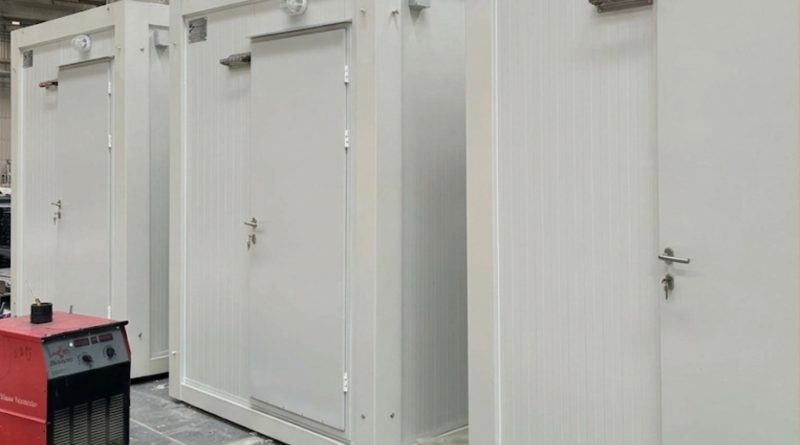
Georgia Tbilisi Project: IP55-Certified GSM and Technical Equipment Shelter Solution for Demanding Field Conditions
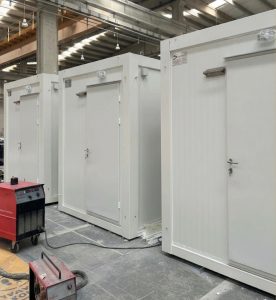
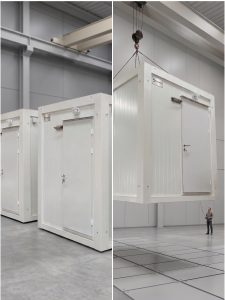
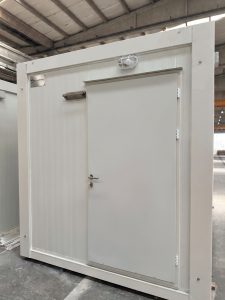
Georgia Monoblock GSM Cabin (2,5 x 4,36 x h2,8m)
Project Summary & Technical Specifications
| Parameter | Project Details |
| Project Name | Georgia / Tbilisi Telecommunications Infrastructure & Equipment Shelter Project |
| Location | Tbilisi, Georgia |
| Product Type | Custom Heavy-Duty GSM Shelter & Technical Container |
| Protection Rating | Independently Laboratory-Verified IP55 Ingress Protection |
| Structural / Design Standard | Eurocode, EN 1090 Structural Steel Standards |
| Climate Control | N+1 Redundant Precision Industrial HVAC System |
| Thermal Insulation | Class A1 Non-Combustible Rockwool Sandwich Panels |
| Delivery Model | Factory-Tested (FAT) Fully Integrated “Plug & Play” Shipment |
Harsh Climate & Critical Need for Uninterrupted Connectivity
The continental climate of Georgia’s capital, Tbilisi, and its surrounding topography presents a rigorous testing ground for mission-critical telecommunications infrastructure. Sub-zero winter temperatures, severe frost cycles, high wind loads, and extreme summer heat fluctuations threaten the continuous operation of sensitive electronic assets. Base Transceiver Stations (BTS), fiber-optic distribution hubs, and uninterrupted power supply (UPS / battery) units form the backbone of regional connectivity; any hardware failure risks significant network downtime.
To mitigate these environmental risks, the project required a heavy-duty technical shelter architecture capable of preventing dust, moisture, and water ingress, dissipating substantial heat loads generated by active electronics, and withstanding local seismic loads. Steel Effect engineered and delivered custom IP55-certified equipment shelters tailored to meet these demanding site specifications.
Applied Engineering & Technical Design Features
1. Certified IP55 Dust & Water Tightness
The structural chassis, multi-layer gasket systems, and modular cable entry transits were engineered and tested to meet rigorous IP55 standards. This sealed enclosure ensures that fine airborne dust and driving rain are entirely prevented from penetrating the electronic equipment bay.
2. Eurocode-Compliant Structural Integrity
Local soil mechanics, seismic acceleration factors, and open-terrain dynamic wind loads were modeled using 3D Finite Element Analysis (FEA) via SAP2000 and Tekla Structures. The high-strength structural steel framework was treated with a high-performance C3/C4 anti-corrosion epoxy paint system to provide long-term atmospheric durability.
3. N+1 Redundant Precision HVAC & Thermal Insulation
To maintain an optimal operating environment of 20°C to 24°C for servers and high-density inverter systems, industrial HVAC units with automatic N+1 failover capabilities were factory-integrated. High-density Rockwool insulated sandwich panels were utilized across the walls and ceiling, providing thermal efficiency while serving as a Class A1 fire barrier.
4. Turnkey Factory-Integrated MEP Infrastructure
To minimize site installation timelines and eliminate field assembly risks:
-
Fire detection and clean-agent gaseous suppression systems,
-
Low-voltage (LV) power distribution switchboards and copper grounding buses,
-
Emergency backup lighting kits and reinforced battery storage racks,
were fully pre-wired, mounted, and quality-tested within our manufacturing facility prior to dispatch.
Factory Acceptance Testing (FAT) & Logistics Execution
Before dispatch, comprehensive Factory Acceptance Tests (FAT) were carried out with third-party inspectors and client representatives. Dimensional tolerances, non-destructive weld testing (NDT/VT), dry film paint thickness (DFT) measurements, and full electrical continuity/isolation verifications were documented with MTC 3.1 material traceability certificates.
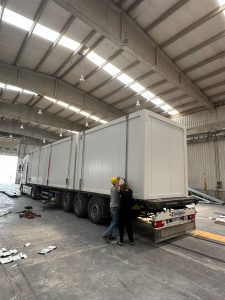
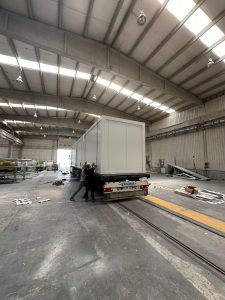
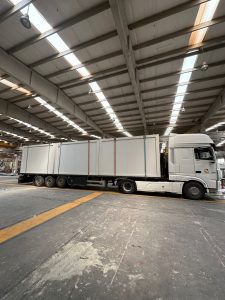
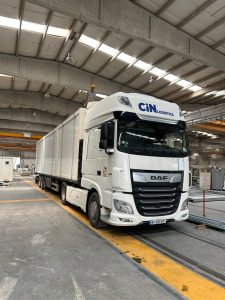
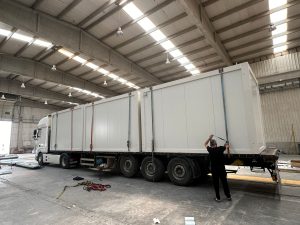
The finished modules were transported via international heavy-haul road freight directly to the installation pad in Tbilisi. Upon crane placement onto the prepared concrete foundation, the plug-and-play shelters were integrated with external utility feeds and fiber backbones, achieving full operational commissioning on the day of delivery.
Engineering Support for Your Critical Infrastructure
Steel Effect continues to engineer and export mission-critical modular structures to over 12 countries across Europe, the Middle East, Central Asia, and the Americas.
For technical inquiries or RFQ evaluations regarding GSM shelters, Battery Energy Storage System (BESS) containers, MV/LV electrical switchgear houses, or modular edge data centers, contact our engineering office:
- Inquiries & RFQ: info@steeleffect.com
- Website: www.steeleffect.com
- Phone: +90 532 250 85 78 and +90 216 514 61 17
-
Headquarters: Pendik / Istanbul, Türkiye